Cut for volume
Boxy bodies, dropped shoulders and wide legs. The range is drawn on a single block so a tee, an overshirt and a trouser layer together without fighting each other.
San Francisco · Est. 2019
Almost everything on the rail is designed to be recognised. We wanted the opposite — clothes that do their job quietly and get better the longer you own them.
 20Pieces in the range
Four rules the range is drawn against. Everything else is negotiable.
Boxy bodies, dropped shoulders and wide legs. The range is drawn on a single block so a tee, an overshirt and a trouser layer together without fighting each other.
240gsm jersey, 12oz rigid denim, vegetable-tanned calf. We choose materials that look better after a year than they did on the hanger.
No monograms, no chest logos, no branded hardware on show. If a piece needs a name printed on it to be worth wearing, we have not designed it well enough.
Welted soles that can be replaced, screw-fixed buckles, seams with enough allowance to be let out. Buying less is only possible if things last.
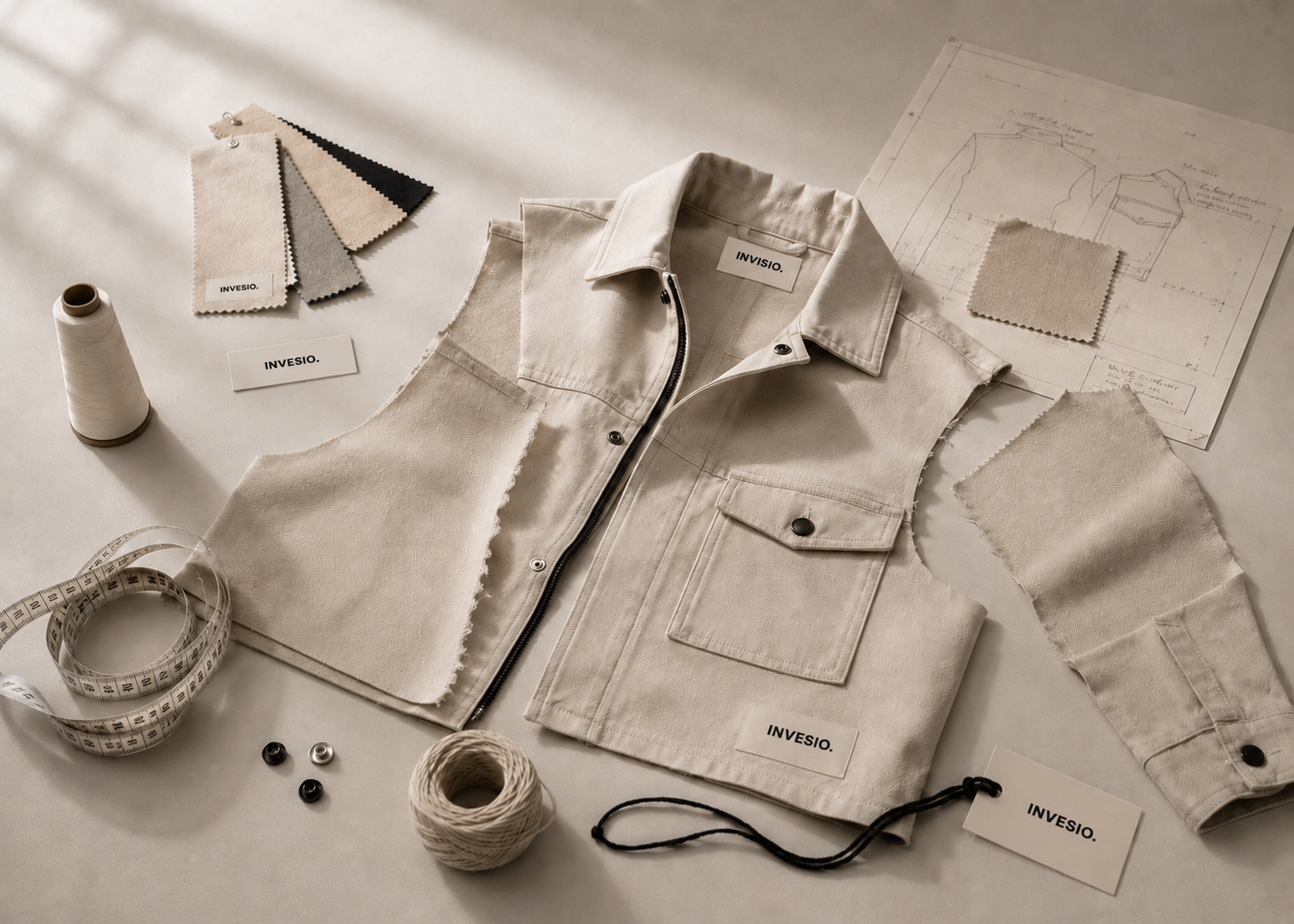
Pattern, panel, stitch
Every piece starts as a paper pattern, marked up by hand and cut in calico before a metre of the real cloth is touched. Panels are corrected on a body rather than on a screen — a collar that rolls wrong is redrawn and cut again.
Seams are chosen for the job they do: flat-felled where a garment takes strain, bound where it sits against skin, bar-tacked at every pocket mouth. Stitch density is specified per cloth, and thread is dyed to the fabric rather than close enough to it.
Then every size is measured flat before it ships — chest, hem, sleeve, rise — and held to half a centimetre. It is slow work, and it is the only reason a second buy in the same size fits like the first.
See the measurementsTwenty pieces, restocked rather than replaced. Start anywhere.